Daily Intake | Still Life
2019 - Still Life
COMMENTARY
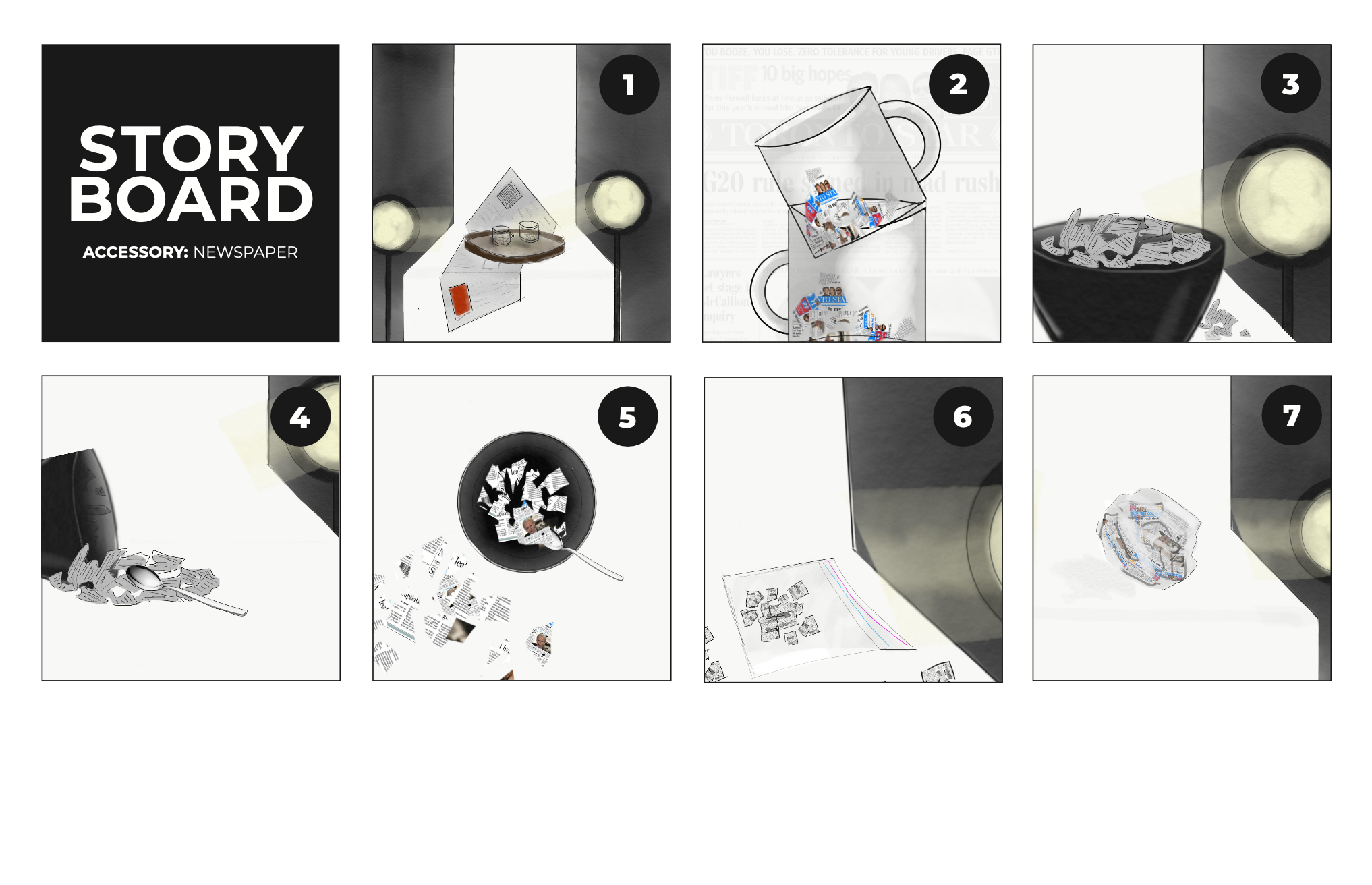
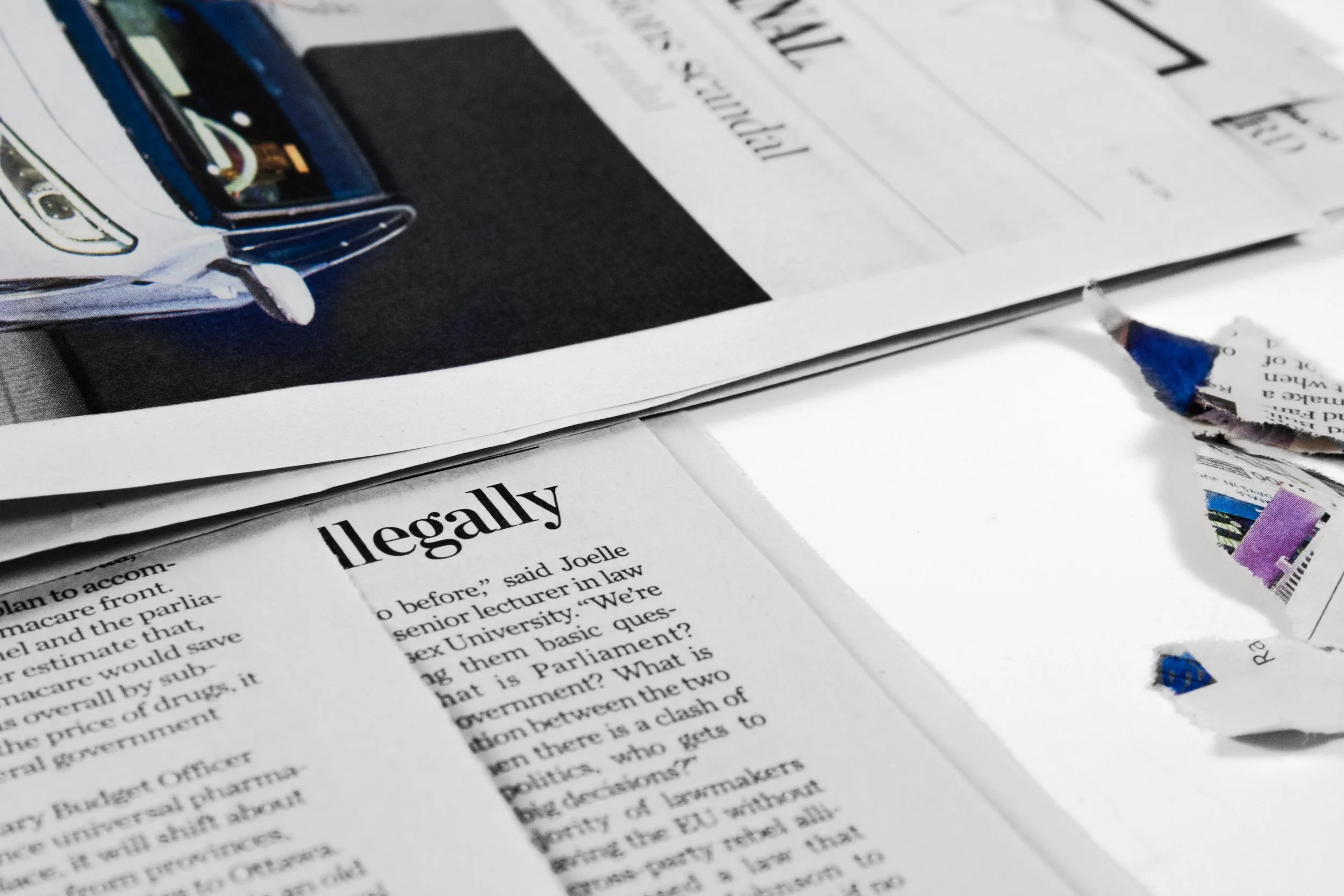
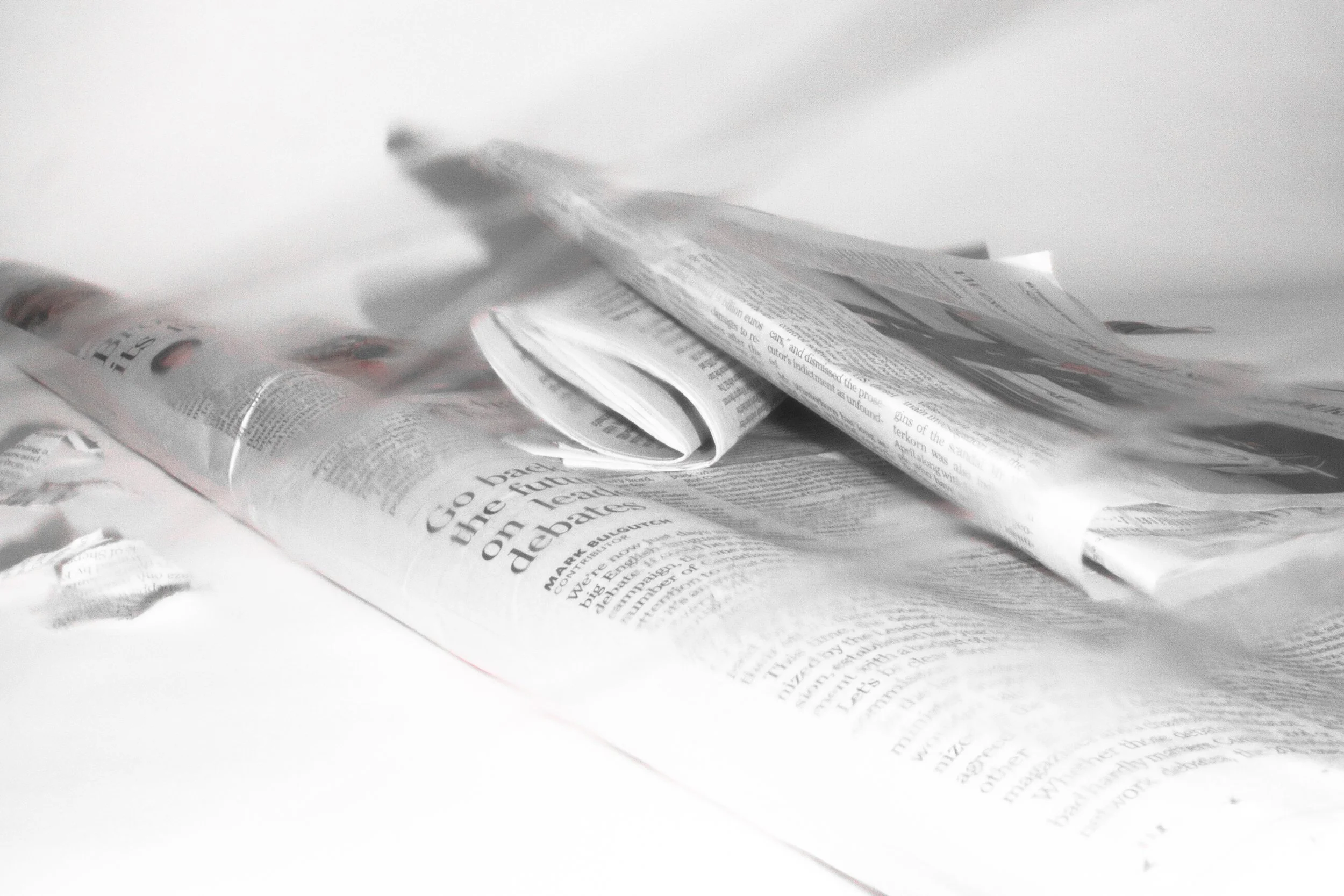
This body of work stages the newspaper not as an object of knowledge, but as a remnant of consumption. Torn from its original form, language is stripped of sequence, authority, and narrative. The page no longer informs; it becomes matter. Its fragments are crumpled, sealed, scattered, served, and contained, suggesting a culture in which news is not read so much as ingested — absorbed in fragments, without digestion, without pause, without completion.
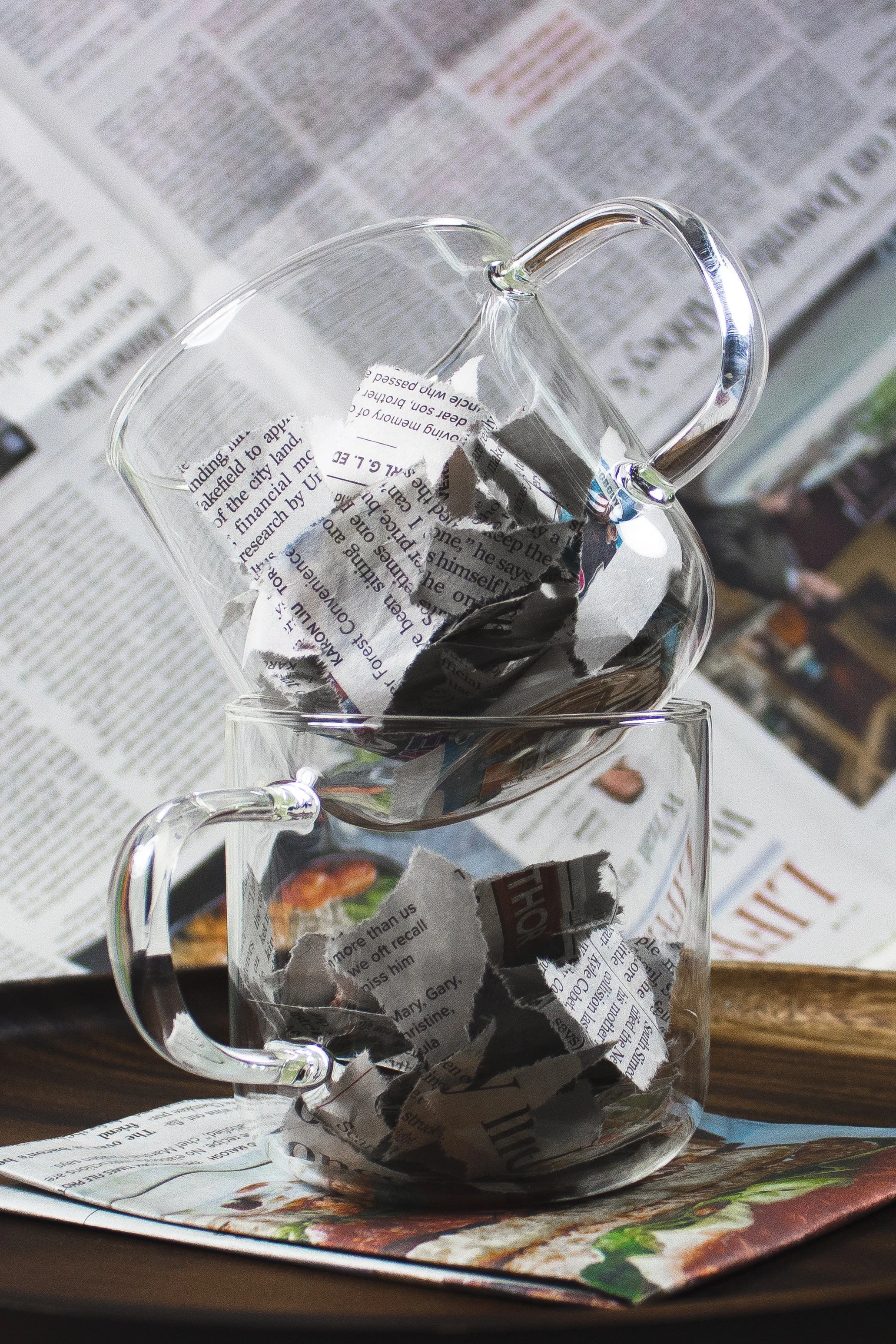
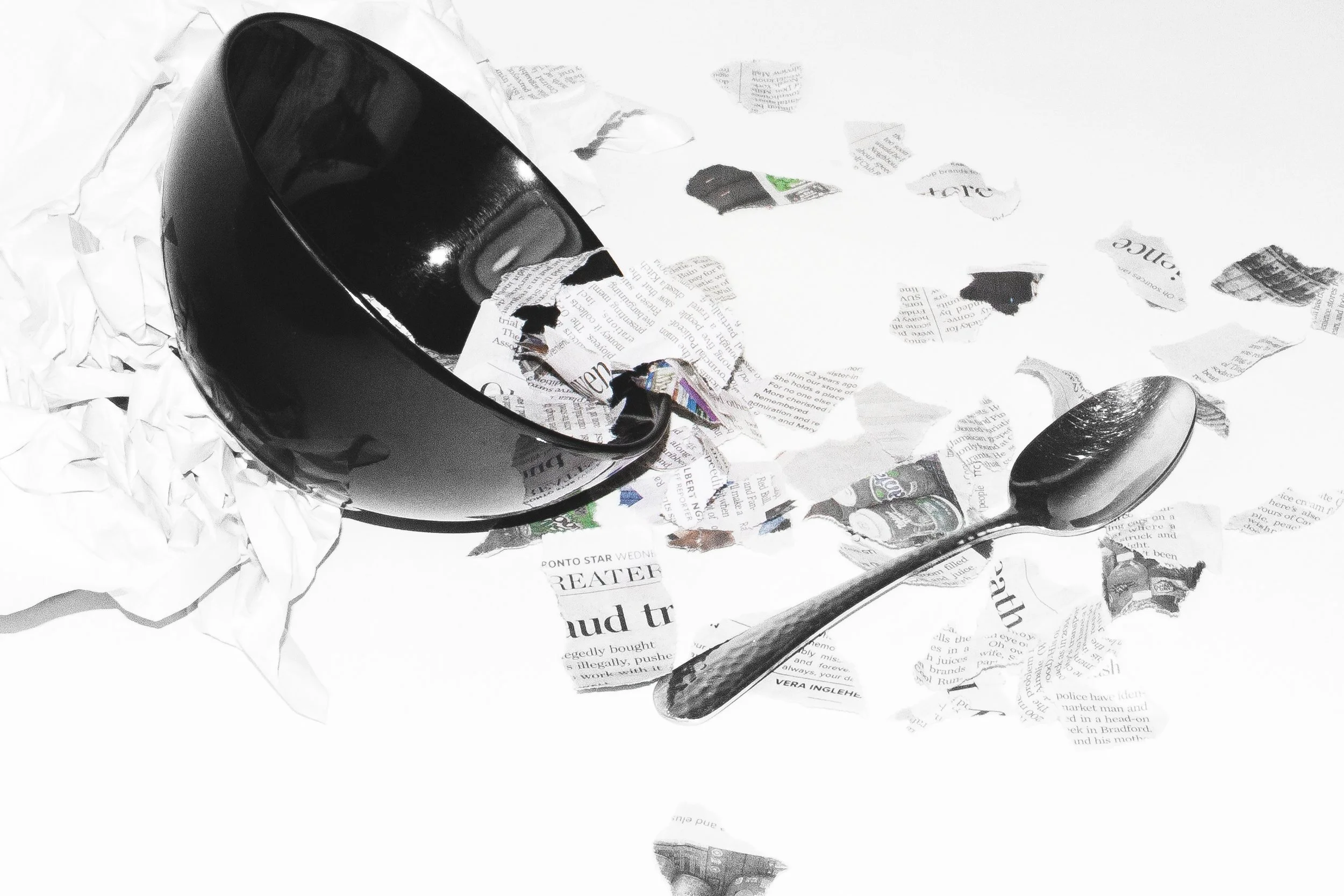
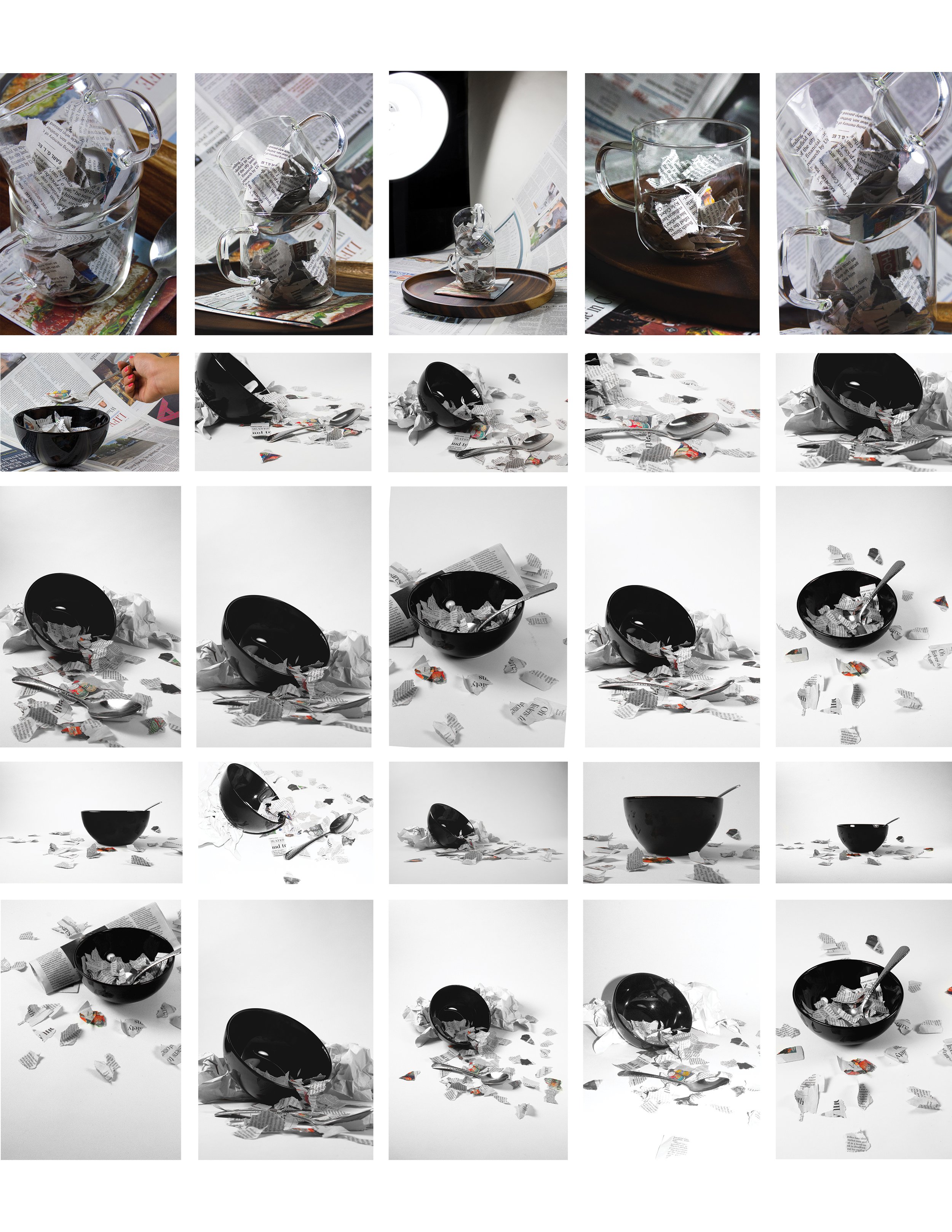
The repeated use of domestic vessels — bowls, spoons, cups — transforms public information into something intimate and bodily. News enters the private sphere as a daily ritual, as habitual as eating or drinking. Yet what is offered is not nourishment. The bowl holds scraps. The spoon implies feeding, but what it serves is dismembered text. These objects quietly implicate the viewer in a cycle of appetite: the craving for updates, headlines, crisis, spectacle, and certainty.
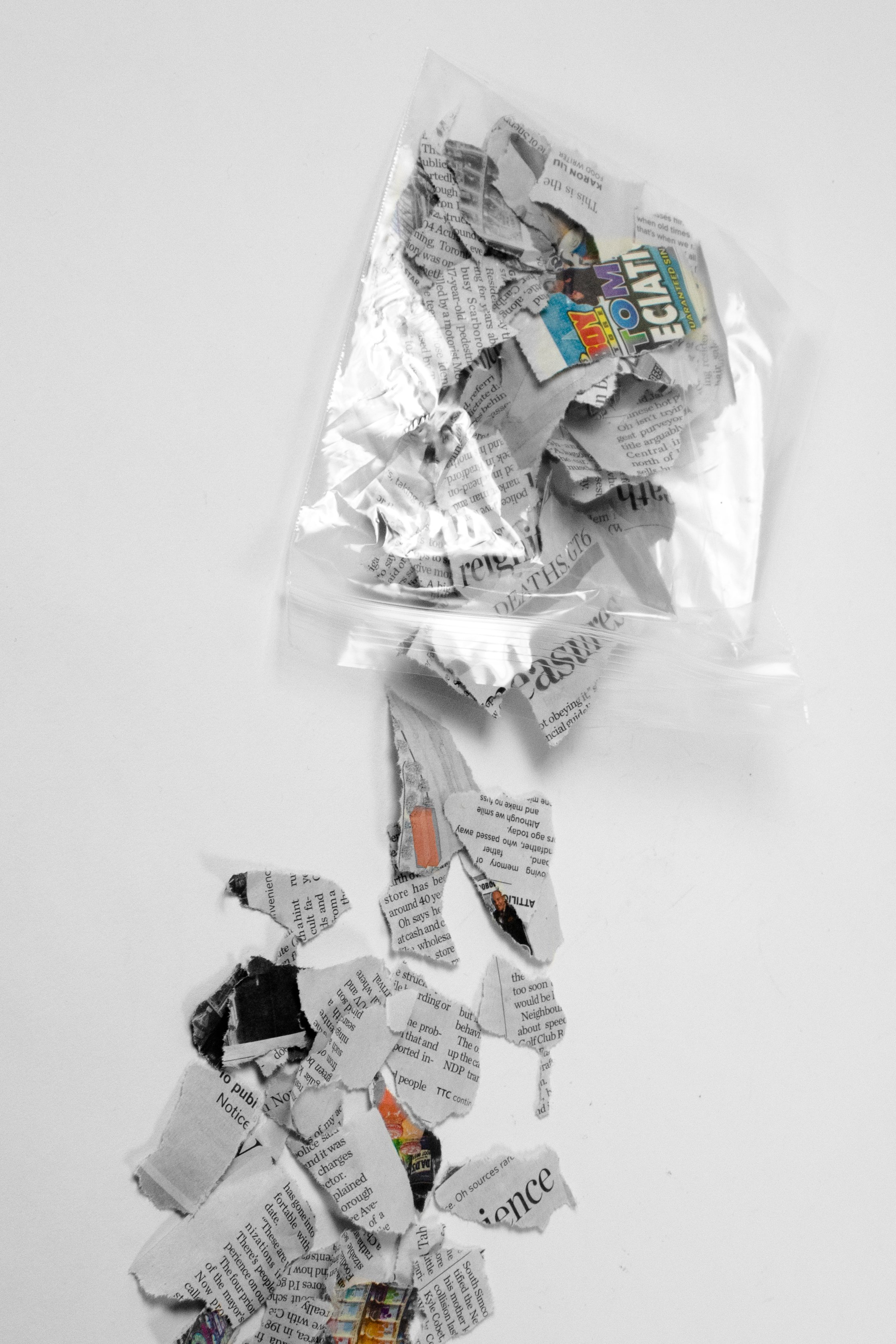
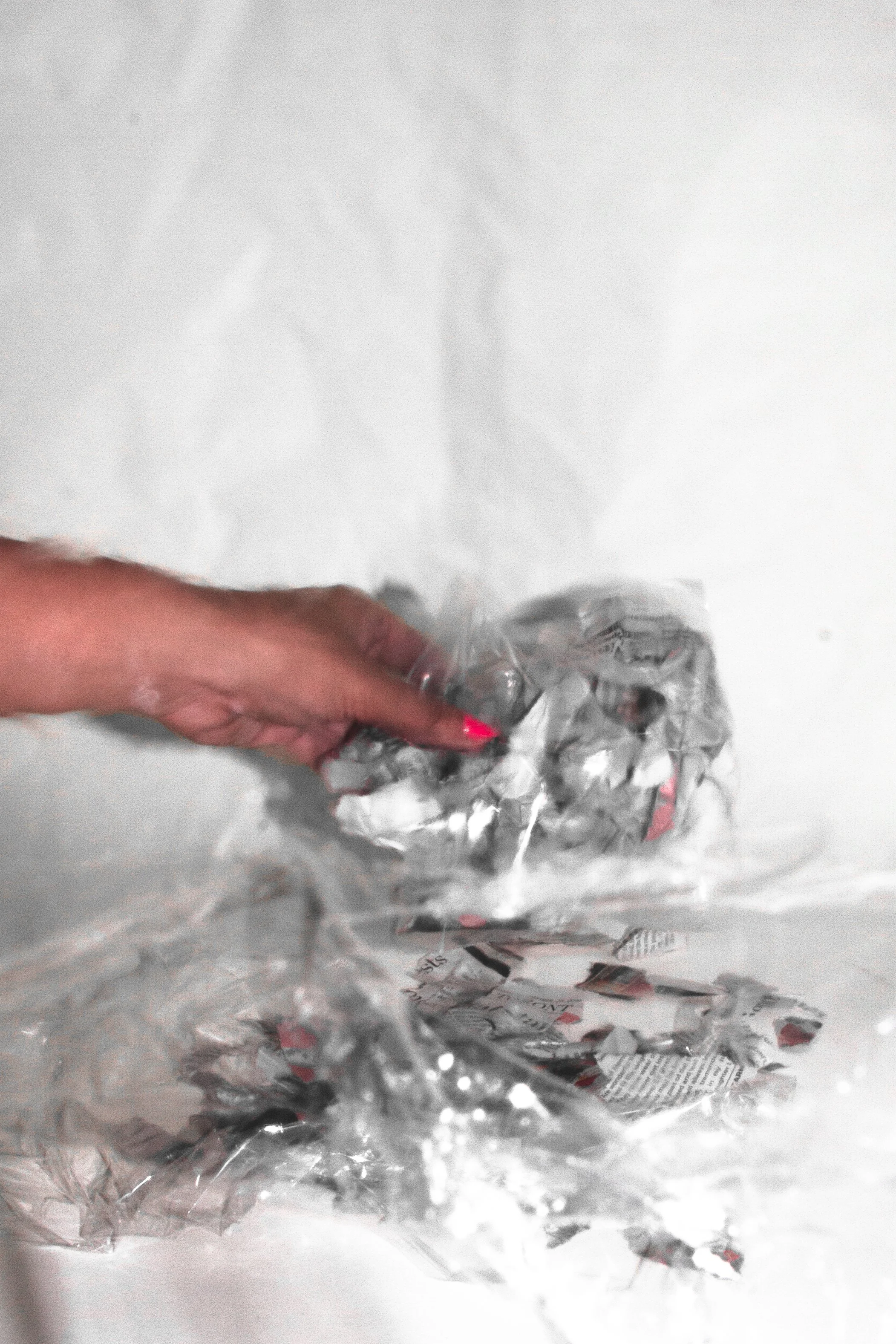
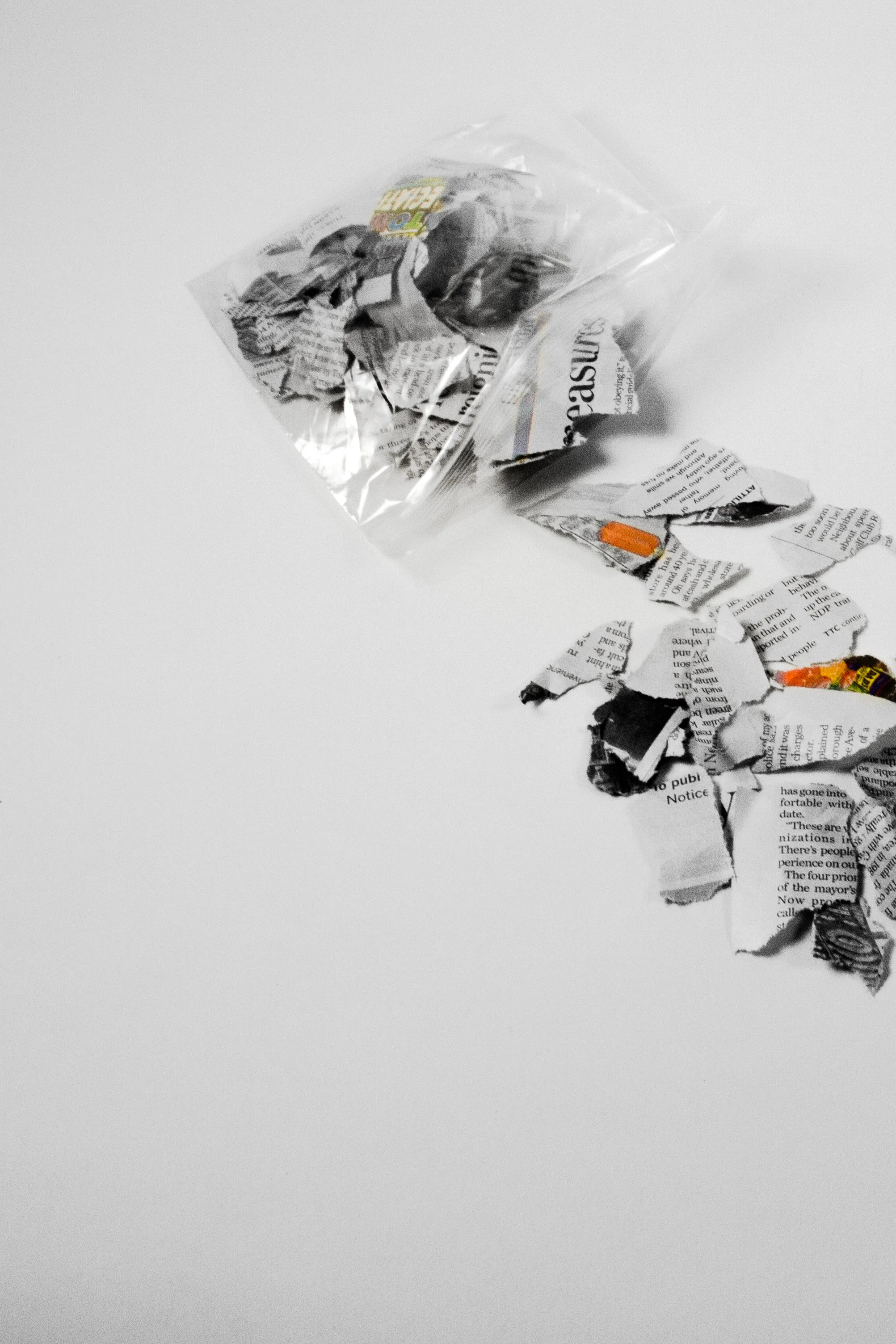
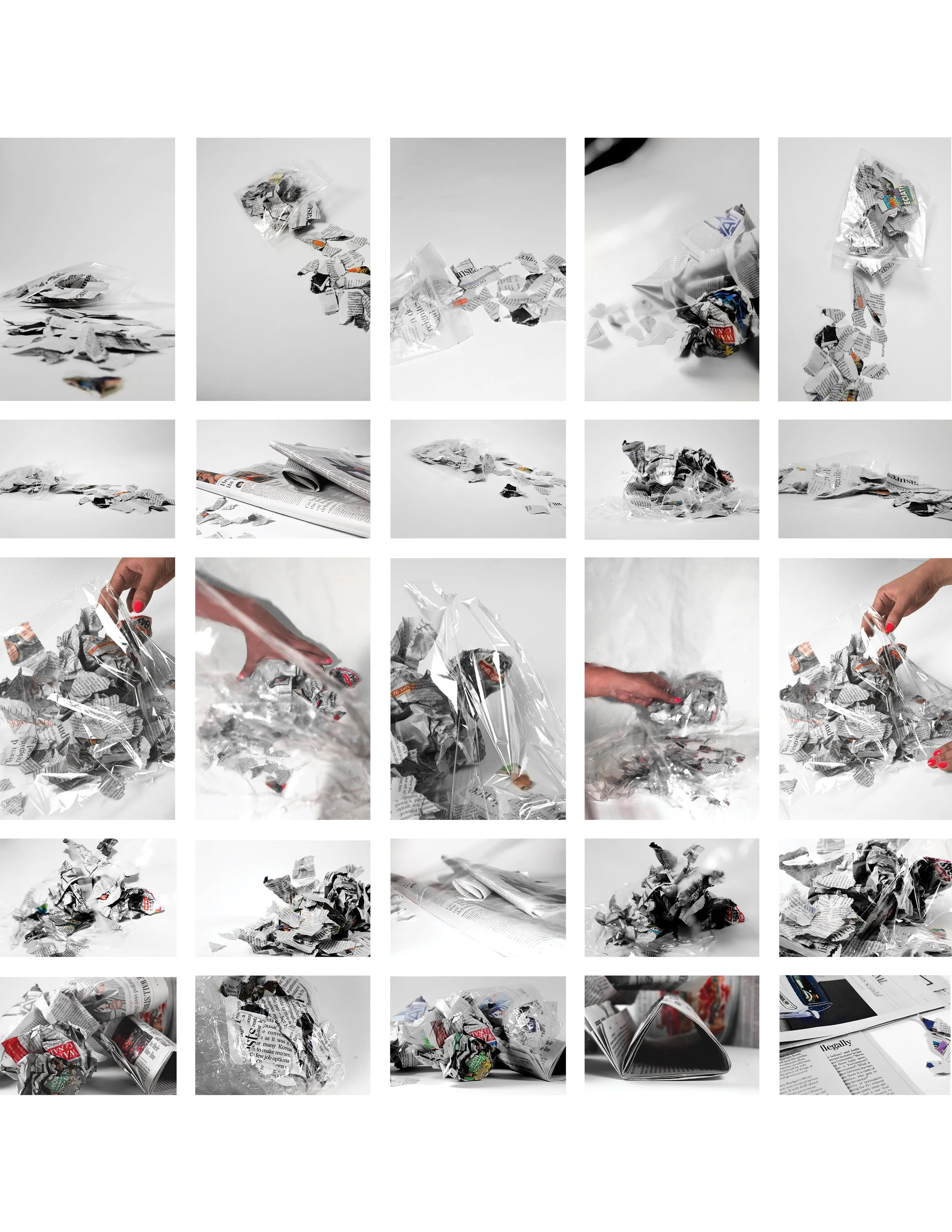
The work suggests that contemporary media consumption is both compulsive and emptying, a form of intake that may leave the body full but the mind unresolved. The plastic baggie is among the most charged symbols in the series. It alludes simultaneously to preservation, contamination, evidence, and contraband. Sealed inside the bag, the newspaper fragments begin to resemble a substance: portioned, illicit, addictive. The image suggests news as a narcotic — consumed in doses, passed through invisible systems, craved for its immediate charge, then discarded. At the same time, the baggie evokes an evidence pouch, as though these torn pieces are remnants from the scene of a larger cultural rupture. What is preserved is not truth itself, but the residue of truth: partial, damaged, and severed from its original context.
The plastic veil intensifies this condition. Transparent but obstructive, it creates the illusion of access while distorting what lies beneath. The viewer can see the fragments, but never cleanly. Reflection, glare, compression, and blur interfere with legibility. In this sense, plastic becomes a metaphor for mediation: the screen, the algorithm, the headline, the editorial frame, the packaging through which reality is delivered. It does not conceal entirely; it alters. It makes information visible but unstable, present but untouchable. Throughout the series, the contrast between clean composition and damaged material produces a quiet tension. The white space, controlled lighting, and restrained palette give the images an almost clinical elegance, while the torn paper resists order. The result is a visual language of aftermath.
These are not dramatic scenes of destruction, but still lifes of residue — what remains after public narratives have been broken down into consumable pieces. The work ultimately asks what happens when collective reality is reduced to fragments and brought into the rituals of everyday life. It considers how we package crisis, aestheticize information, consume violence, and confuse visibility with understanding. In these images, the newspaper is no longer a record of the world. It is waste, evidence, substance, meal, and memory. It is something we hold close, but cannot fully grasp.
GILLIAN GAINHAM (2019)
STORY BOARDING & PRELIMINARY